 by Rikos
A New Slice of Reality: How Pizza Operators Can Buck Industry Trends
For the past several decades, pizza has been the Big Cheese of the restaurant industry. With its uniquely protected position as the go-to for fast food, take-out and delivery, pizza has remained a staple of American eats. Today, however, the restaurant landscape is increasingly defined by fragmentation—and it’s getting harder for restauranteurs to get a slice of the ever-changing pie.
After decades of experience in the industry, I’ve learned to resist the temptation to chase short-term fixes at the expense of trust, consistency, and quality. It’s becoming increasingly clear that competing on price alone is no longer a sustainable strategy, so howcan pizza brands keep raking in the dough? Operators that rely solely on discounting, speed, or convenience are finding themselves squeezed from all sides. The brands that are successfully weathering these changes are those that understand a critical, simple truth: consumers aren’t just buying food—they’re paying for service, quality, and bold, differentiated flavors worth talking about.
You Are What You Eat (So Make It Good!)
Industry-wide, we’re seeing a quiet but meaningful evolution in the modern appetite. Families are dining out differently. In line with the sober-curious movement and growing health consciousness, younger consumers are drinking less alcohol and reading the fine print. With growing skepticism around heavily-processed foods, artificial substitutes, and short-term diet fads, young consumers aren’t just counting calories; they’re increasingly mindful of ingredients. As a result, diners are gravitating toward simpler menus built on high-quality raw ingredients, whole foods, and options that feel lighter and more balanced—ideally while maintaining crowd-pleasing flavor.
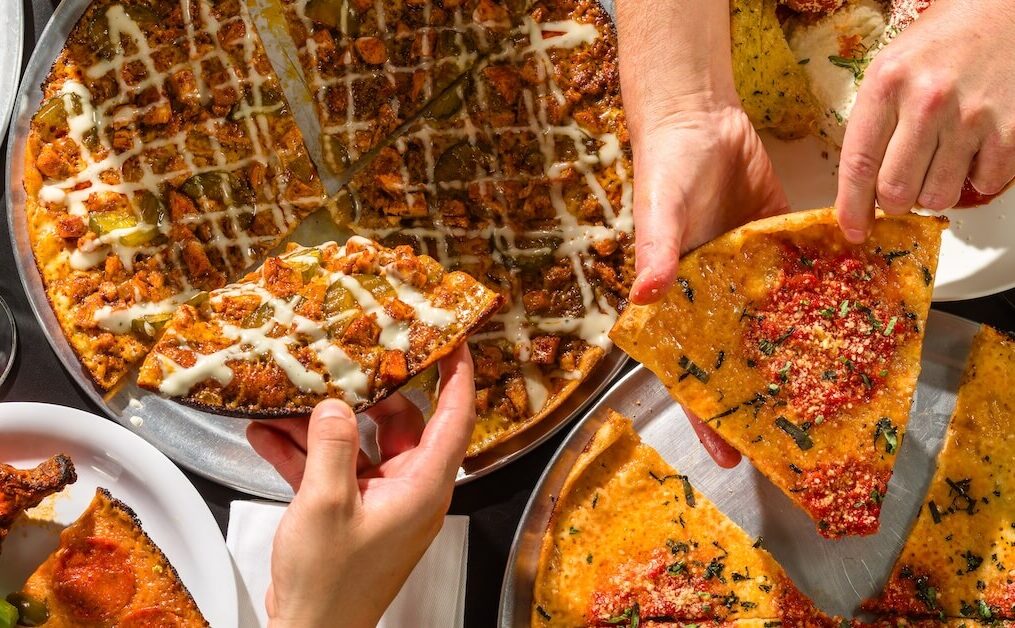
This doesn’t mean restaurants need to chase every trend. In fact, the opposite is true. The challenge ahead is discernment—understanding which shifts represent lasting behavioral change, and which will fade as quickly as they arrive. That said, protein-forward menus, fresh ingredients, and leaner menu items aren’t fads; they’re authentic, future-forward responses to how people want to eat today. At Riko’s Pizza, thin crust is always trending—a lighter alternative to other crusts, our pies leave customers satiated, rather than over-stuffed.
Food For Thought: Offer Options
Menu breadth has become a powerful differentiator. Among families and friend groups alike, there is almost always a “veto vote”: someone who doesn’t want pizza, burgers, or wings again. The goal isn’t to be everything to everyone, but to be flexible enough to meet different needs at the same table. Yes, this means meatless menu items, gluten-free substitutes, and sauces on the side—yet creativity is always key.
Of course, consistency and reliability are essential to brand-building. Crowd-pleasing doesn’t have to mean stepping outside your wheelhouse entirely; but sometimes it helps to reinvent the wheel where you can. Limited-time-offers and a rotating drink list are just two ways to add variety within the realm of one’s brand, keeping it fresh while still staying familiar. Restaurants that can offer options, without losing focus, create more reasons for guests to keep coming back.
The Vibe is Table Stakes
Delivery is no longer dominated by pizza and Chinese food—third-party platforms have dramatically expanded consumer choice, summoning everything from sushi to steak to our doorsteps with the push of a button. Amid so many options, pizza is no longer the default. This shift has put significant pressure on delivery-only and value-driven pizza models, particularly as labor, commodity, and freight costs continue to rise.
Now that delivery has become mainstream, consumers want a dining experience that really delivers—one they’ll crave as much as the meal. Full-service restaurants that offer dine-in, bar seating, private events, and family-friendly environments are better positioned than those built solely around takeout and delivery. Creating a space where parents can enjoy a meal, kids can engage comfortably, and groups can gather around shared moments—whether it’s date night, a local game, or a happy hour with colleagues—adds value that no app can replicate.
In 2026, restaurants can no longer rely on minimal competition or knee-jerk promotions. Navigating these shifts has reinforced a belief I’ve developed as an industry veteran: long-term success comes from a few well-executed fundamentals. Start with high-quality ingredients (and don’t compromise); design menus that respect how people actually eat; and curate environments that invite genuine connection.